 Call Us : 08045803235



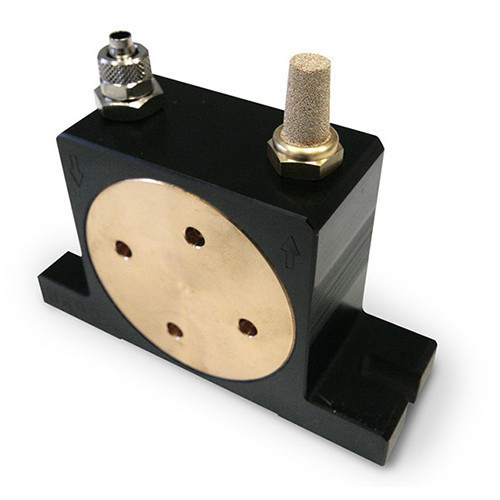
Rotary Pneumatic Vibrators - Roller
5000 INR/Set
Product Details:
- Media Compressed Air
- Structure Roller Type, Rotary
- Power Up to 936 N
- Material Aluminium Body, Steel Roller
- Air Consumption 350-800 l/min
- Speed 8000 - 35000 RPM
- Maximum Torque 5.79 Nm
- Click to View more
X
Rotary Pneumatic Vibrators - Roller Price And Quantity
- 5000 INR/Set
- 1 Pair
Rotary Pneumatic Vibrators - Roller Product Specifications
- Compressed Air
- 8000 - 35000 RPM
- Up to 936 N
- 350-800 l/min
- Aluminium Body, Steel Roller
- Roller Type, Rotary
- 5.79 Nm
- G 1/4" to G 1/2"
- 0.7 - 5.7 kg
- 2-6 bar (29-87 psi)
- Bunker, Hopper, Chute, Pipe, Bin vibration
- Threaded (BSP) or Flanged
- 70-90 dBA
- -20°C to +100°C
- RS, RV, RTR series
- Up to 1630 N
- Lubricated Air Required
Product Description
Technical Specification
| Air Supply Quality | Class 5.4.4. |
| Application | Hopper and silo - piping - chute - concrete compaction |
| ATEX | II 2D C TX, II 2G C TX |
| Duty Cycle | Continuous |
| Material | Aluminium body and brass cover |
| Max Noise Level | Less than 90 dB(a) |
| Pneumatic Circuit | Filter + flow control valve + lubrification + 3/2 ways valve |
| Powder | Hygroscopic |
| Problem Solving | Friction reduction - compaction |
| Technology | Roller vibration - high frequency and centrifugal force |
| Working Pressure | From 2 bar to 6 bar (from 29 psi to 87 psi) |
| Working Temperature | From -20 deg C to 200 deg C (from -4 deg F to 392 deg F) |
Reliable Material Flow Solutions
Rotary Pneumatic Vibrators efficiently minimize material blockages and bridging in silos, bins, pipes, and hoppers. Their powerful vibration force dislodges even stubborn materials, ensuring consistent flow and reducing downtime in industrial processes. Suitable for handling powders, granules, and bulk solids, these vibrators support productivity across various sectors.
Robust Design, Flexible Installation
Made from durable aluminium with steel rollers, these rotary vibrators are built for heavy-duty use. They can be mounted easily using threaded BSP or flange options, accommodating diverse installation requirements. Their compact weight range (0.7-5.7 kg) and versatile connection sizes (G 1/4" to G 1/2") facilitate quick setup and integration into existing systems.
Efficient Performance with Compressed Air
Operating on compressed air, rotary vibrators achieve high rotational speeds (up to 35000 RPM) and strong vibration forces. Air consumption ranges from 350-800 l/min, and lubricated air ensures longevity and smooth operation. Their noise levels (70-90 dBA) remain within industrial standards, supporting safe and efficient workplace environments.
FAQ's of Rotary Pneumatic Vibrators - Roller:
Q: How do rotary pneumatic vibrators benefit my material handling system?
A: Rotary pneumatic vibrators ensure reliable flow in bins, hoppers, bunkers, and chutes by preventing clogging and bridging. This results in reduced downtime and more consistent material feed during processing, improving operational efficiency.Q: What is the process to install these vibrators on industrial equipment?
A: Installation involves mounting the units via threaded BSP or flanged connections on your silo, hopper, pipe, or bin. Ensure a compatible connection size (G 1/4" to G 1/2"), attach the compressed air supply, and use lubricated air to maintain performance and extend service life.Q: When should I consider using rotary pneumatic vibrators for my application?
A: Rotary pneumatic vibrators are recommended when experiencing frequent material blockages or poor flow in storage and transfer equipment. They are particularly effective in applications with powders, granules, or bulk solids requiring agitation or discharge assistance.Q: Where are rotary pneumatic vibrators typically applied?
A: These vibrators are commonly used in industries such as food processing, chemical, pharmaceuticals, and mining. Typical applications include mounting on bunkers, hoppers, chutes, pipes, and bins to facilitate material movement and discharge.Q: What operational requirements should I be aware of for these vibrators?
A: They require a steady supply of lubricated compressed air within 2-6 bar (29-87 psi) and compatible air consumption (350-800 l/min). Operating temperatures should stay between -20C and +100C to ensure optimal performance.Q: How does the vibrator's construction contribute to durability and efficiency?
A: Featuring a robust aluminium body and steel roller, these vibrators offer excellent resistance to wear and demands of industrial environments. Their rotary roller design delivers powerful and consistent vibration with minimal maintenance needs.Tell us about your requirement

Price:
Quantity
Select Unit
- 50
- 100
- 200
- 250
- 500
- 1000+
Additional detail
Mobile number
Email

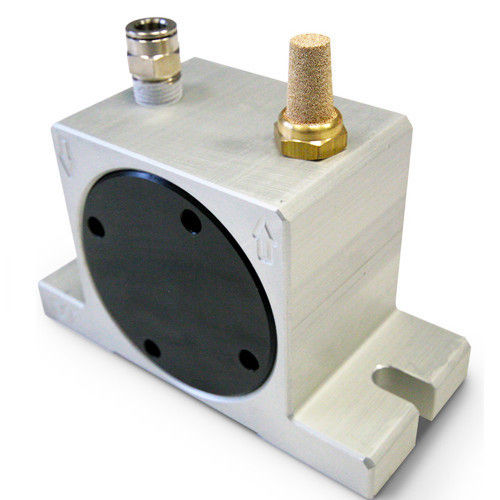
Other Products in 'Rotary Pneumatic Vibrators' category


Address
SRI VARI ENTERPRISES
GST : 33AKMPJ8272D1Z4
GST : 33AKMPJ8272D1Z4
- Sri Rp Complex, No 45 A, Housing Board Road, Kovipudur Cross, Palakkad Main Road,Coimbatore - 641042, Tamil Nadu, India
- Phone :08045803235
- Send Inquiry
- Mumbai Branch Office : Survey No 69/1, Shop No 07- A Wing Ground Floor, Prakruti Pearl, Hiranandani Estate, Patlipada, Ghodbunder Road, Thane, Maharashtra, 400607
Chennai Branch Office : A. Jaya Prabha, 31/32, Annailam, 1st Floor, Thiruneer, Thiruneermalai Main Road, Chromepet, Chennai
 Send Inquiry
 Send Inquiry
 Send SMS
 Call Me Free
 |
SRI VARI ENTERPRISES
All Rights Reserved.(Terms of Use) Developed and Managed by Infocom Network Private Limited. |
