 Call Us : 08045803235



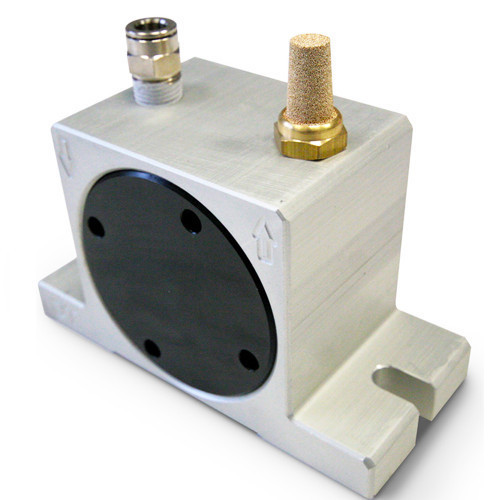
Rotary Pneumatic Vibrators - Turbine
5000 INR/Set
Product Details:
- Power up to 234 W
- Structure Enclosed turbine, flange or threaded mounting
- Media Filtered compressed air (oil-free or lubricated)
- Material Aluminum alloy body, steel rotor
- Air Consumption 1.25 to 6.5 l/s (depends on model and air pressure)
- Speed up to 42,000 rpm
- Maximum Torque up to 3 Nm
- Click to View more
X
Rotary Pneumatic Vibrators - Turbine Price And Quantity
- 1 Set
- 5000 INR/Set
Rotary Pneumatic Vibrators - Turbine Product Specifications
- Enclosed turbine, flange or threaded mounting
- up to 3 Nm
- Filtered compressed air (oil-free or lubricated)
- 1.25 to 6.5 l/s (depends on model and air pressure)
- up to 42,000 rpm
- Aluminum alloy body, steel rotor
- up to 234 W
- 55 to 75 dB(A)
- Foot, flange, or threaded
- 2 to 6 bar
- High (industrial-grade materials)
- up to 50,000 vibrations/min
- -20°C to +80°C
- Low, no lubrication required
- Standard G1/8 or G1/4
Product Description
Technical Specification
| Air Supply Quality | Class 5.4.1. |
| ATEX | II 2D C TX, II 2G C TX |
| Duty Cycle | Continuous |
| Material | Aluminium body |
| Max Noise Level | Less than 90 dB(a) |
| Pneumatic Circuit | Filter + flow control valve + 3/2 ways valve |
| Powder | Dry and granular [food] - concrete |
| Problem Solving | Friction reduction - separation - consolidation |
| Technology | Turbine vibration - high frequency and centrifugal force |
| Working Pressure | From 2 bar to 6 bar (from 29 psi to 87 psi) |
| Working Temperature | From-20 deg C to 120 deg C (from-4 deg F to 248 deg F) |
| Application | Hopper and silo - screen - vibrating table - chute - concrete consolidation |
High-Performance Vibration Technology
These rotary pneumatic vibrators employ a turbine mechanism for maximum vibration efficiency, reaching speeds up to 42,000 rpm. Their robust design supports usage in challenging industrial environments, delivering up to 234 W of power and 3 Nm of torque. Enclosed structures ensure reliable operation even in dusty or moist conditions.
Flexible Mounting and Installation
Thanks to versatile mounting options including foot, flange, or threaded connections, these vibrators adapt easily to various machinery and production lines. Standardized air inlets (G1/8 or G1/4) further streamline integration, offering hassle-free setup in both new and existing systems.
Durable Construction and Low Maintenance
Built with industrial-grade aluminum alloy and a steel rotor, these units offer high corrosion resistance. The maintenance-free, lubrication-free design reduces downtime and extends service life, making them ideal for continuous or critical applications across multiple industries.
FAQ's of Rotary Pneumatic Vibrators - Turbine:
Q: How do rotary pneumatic vibrators with turbine technology operate?
A: Rotary pneumatic vibrators use compressed air filtered through a turbine, generating rapid oscillations that create high-frequency vibration. This efficient mechanism enables reliable performance for material flow, compaction, and discharge in industrial settings.Q: What are the main benefits of using this type of pneumatic vibrator?
A: These vibrators offer high vibration frequency (up to 50,000 vibrations/min), low noise output, minimal maintenance (no lubrication required), and excellent corrosion resistance. The robust construction ensures long service life even in harsh industrial environments.Q: When should I consider installing a rotary pneumatic vibrator?
A: Install rotary pneumatic vibrators when dealing with sticky, clinging, or sluggish bulk materials in hoppers, chutes, or bins. They are also suitable whenever compact size, reliable vibration, and low maintenance are essential requirements.Q: Where can these pneumatic vibrators be mounted on industrial equipment?
A: These vibrators support diverse mounting configurations including foot mounts, flange mounts, or threaded connections. This flexibility allows them to be installed on bins, silos, feeders, conveyors, and other machinery as needed.Q: What is the process for connecting and operating the vibrator?
A: Connect the unit to a suitable compressed air line (filtered, oil-free or lubricated) using standard G1/8 or G1/4 fittings. Ensure the operating pressure (2 to 6 bar) and air consumption (1.25 to 6.5 l/s, depending on the model) match your process requirements. Once connected and secured, the vibrator is activated through air supply.Q: How does the low maintenance design benefit users?
A: The enclosed, lubrication-free construction reduces the need for regular servicing, saving time and operational costs. The use of high-quality materials further minimizes the risk of failure, ensuring continuous operation with minimal supervision or downtime.Tell us about your requirement

Price:
Quantity
Select Unit
- 50
- 100
- 200
- 250
- 500
- 1000+
Additional detail
Mobile number
Email

Other Products in 'Rotary Pneumatic Vibrators' category


Address
SRI VARI ENTERPRISES
GST : 33AKMPJ8272D1Z4
GST : 33AKMPJ8272D1Z4
- Sri Rp Complex, No 45 A, Housing Board Road, Kovipudur Cross, Palakkad Main Road,Coimbatore - 641042, Tamil Nadu, India
- Phone :08045803235
- Send Inquiry
- Mumbai Branch Office : Survey No 69/1, Shop No 07- A Wing Ground Floor, Prakruti Pearl, Hiranandani Estate, Patlipada, Ghodbunder Road, Thane, Maharashtra, 400607
Chennai Branch Office : A. Jaya Prabha, 31/32, Annailam, 1st Floor, Thiruneer, Thiruneermalai Main Road, Chromepet, Chennai
 Send Inquiry
 Send Inquiry
 Send SMS
 Call Me Free
 |
SRI VARI ENTERPRISES
All Rights Reserved.(Terms of Use) Developed and Managed by Infocom Network Private Limited. |
